Australian scientist dreams to serve Vietnamese with quality vegetables
Dr. Lyndal Hugo, co-founder of Orlar, a Vietnam-based women-led company, dreams of serving Vietnamese families with clean, fresh, and nutritious food from her organic farms in the Southeast Asian country.
Different from other indoor farming models, her new vertical farms use a special stone that holds the key to what was designed as Hugo’s dream to provide more affordable quality vegetables for every family.
No rosy path to success
Hugo has a background in agroscience, a Sydney University PhD in environmental chemistry, and a post-doctoral fellowship on pesticide residues in Southeast Asian food chains.
When working on environmental accounting for big mining and agriculture companies in Australia and China, she encountered a particular rock. As it is Orlar’s technology secret, it is called Orlarock.
Orlarock is used to replace soil in the vertical systems, which are called ‘pods.’
|
|
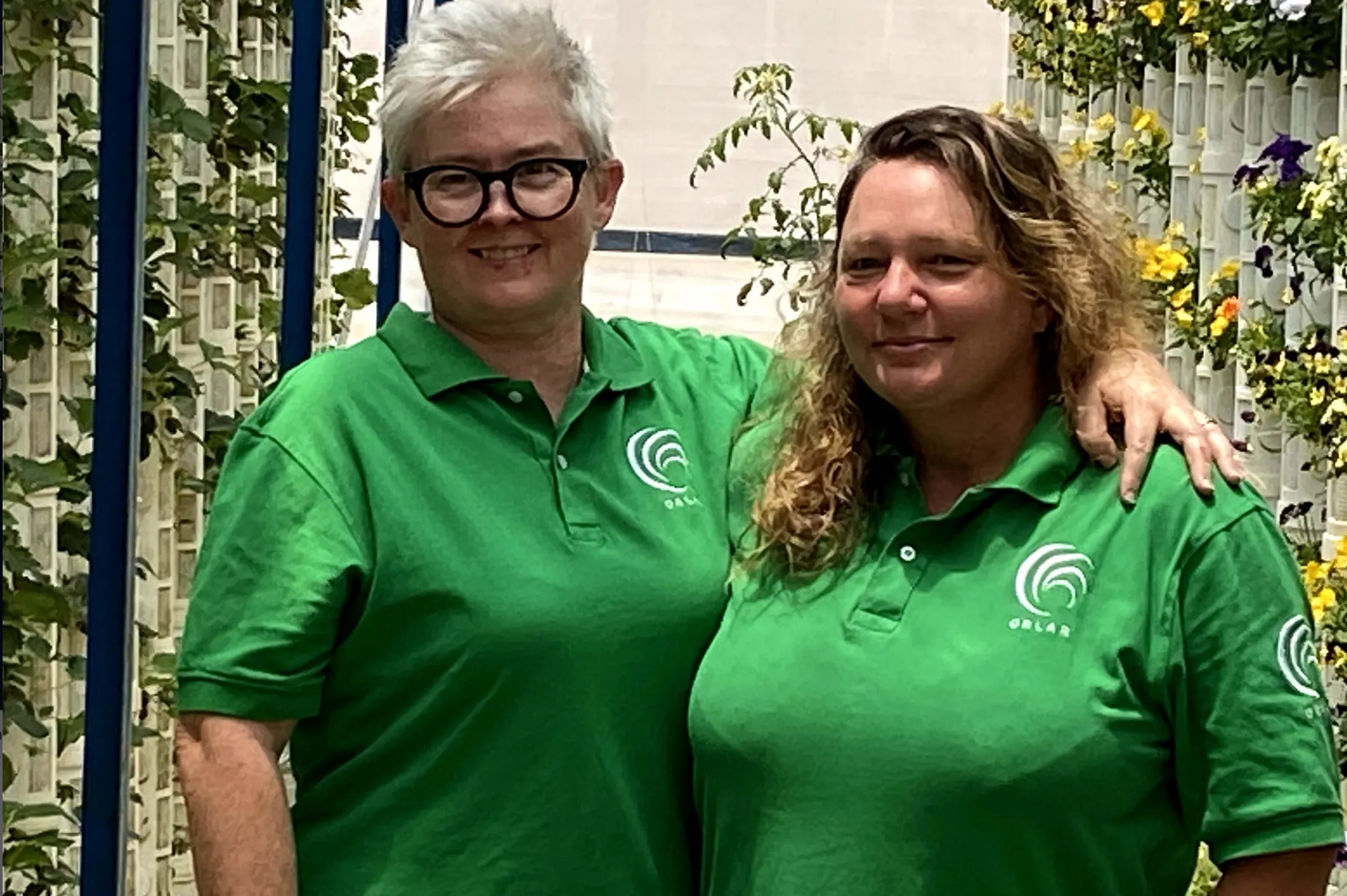
| Lyndal Hugo (left) and Amanda Cornelissen are seen in a photo at their high-technology farm in Lac Duong District, Lam Dong Province, Vietnam. Photo: Orlar |
With a secret method of treatment, the ‘Orlarock’ can capture all the added nutrients, resist disease, avoid crushing in vertical arrangements, and retain the optimal amount of water, thus resulting in proper growth without disease.
Orlarock allows the company’s products to be free from the contaminants often found in local soil.
Along with the water-holding and thermal insulation of the rock in the pods, these rocks become a home for trillions of microbes, which are beneficial.
Orlarock can be reused indefinitely, crop after crop, which makes the technology utterly economical.
With belief in the potential of Orlarock and after testing in the lab and field, Hugo and her wife, Amanda Cornelissen, began their operations in Vietnam in 2017.
Combining Cornelissen’s experience as a horticulturist with Hugo’s ideas, the two aimed to produce the cleanest, freshest, most nutritious food while creating clean, safe jobs for low-income local and ethnic-minority people.
|
|
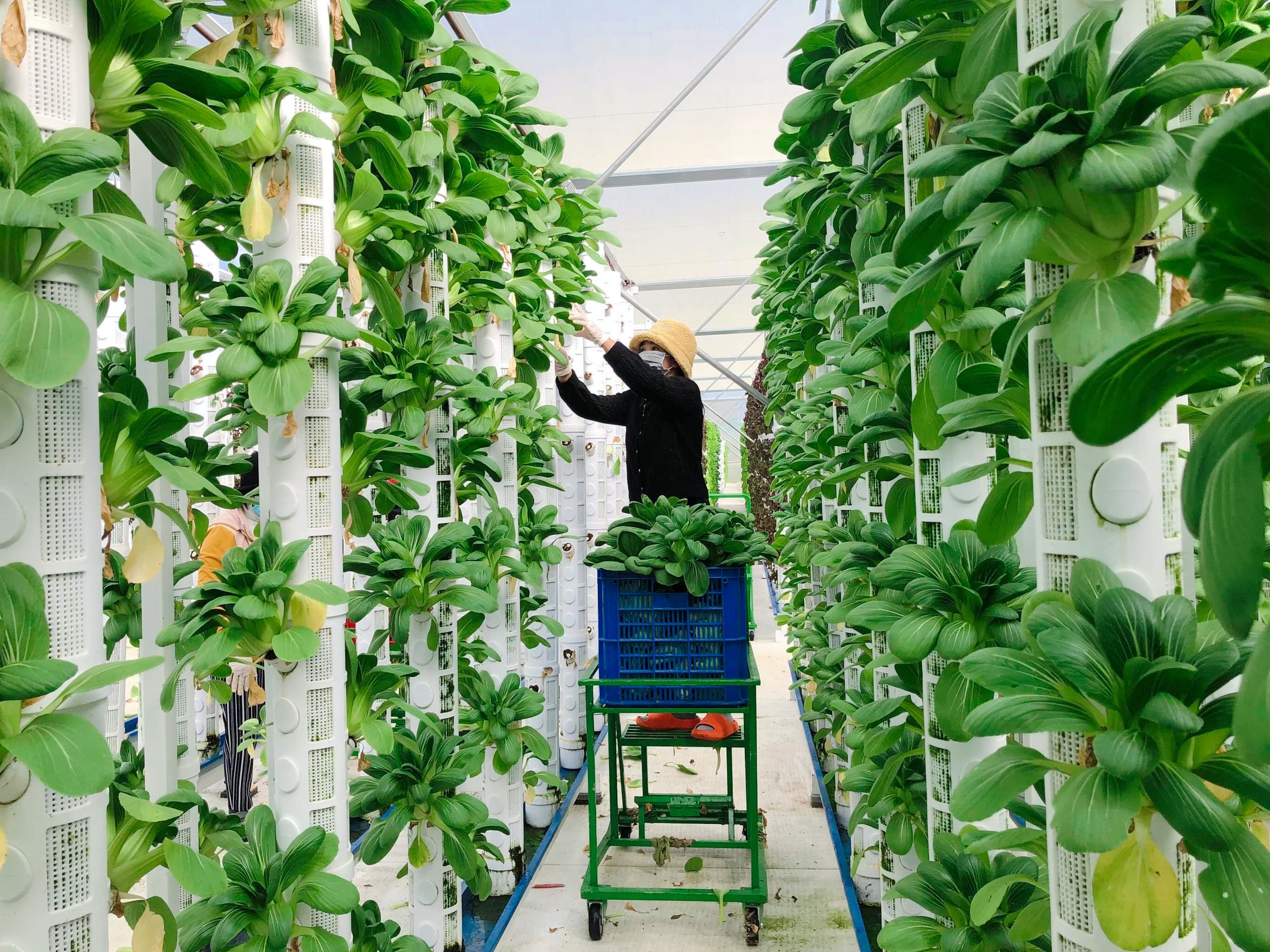
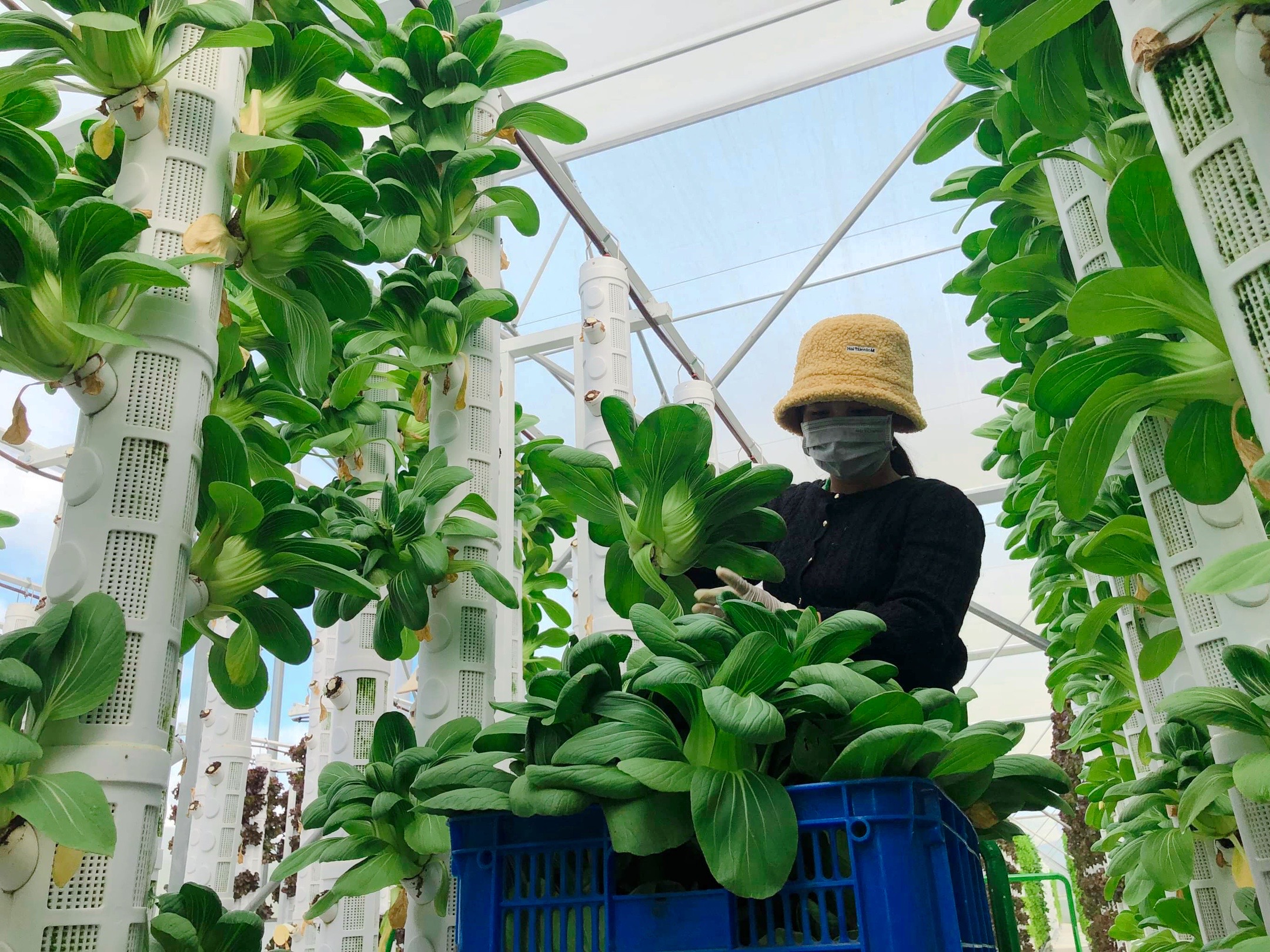
| Harvesting bok-choi at an Orlar farm in Lac Duong District, Lam Dong Province, Vietnam. Photo: Hong Van / Tuoi Tre |
“We sold our house and invested our savings in putting together a team of foreigners and locals to build our first pilot facility in Ho Chi Minh City,” Hugo recalled.
“Back then, little did we know the journey we were about to embark upon.
“It was US$600 for two one-way tickets home back then. But for years, we never had more than that in the bank …
“We lived in a tin shed with dirt floors, tipping a bucket over our heads for a shower.”
After overcoming numerous challenges, including the COVID-19 lockdown in 2021, government grants were awarded for the technology Hugo discovered, including a €350,000 ($369,000) grant together with an SNV technical assistance package the Dutch Fund for Climate Development’s Origination Facility Investment Committee approved for Orlar Vietnam on December 14, 2020.
To serve billions
Orlar farms produce up to 20 tons of vegetables per hectare per month. The company has roughly 20,000 towers, two meters tall each, with 20 plants grown in each pod.
A drip irrigation system is used to provide the plant with the exact amount of water that it needs.
This saves up to 95 percent of the water used in comparison with other traditional farming methods.
To compare, Mekong rice uses 2,500 liters of water per kilogram while Orlar food needs just 30 litres, while generating four times the revenue per kilogram.
Also, vertical farming, with 20 plants grown in each two-meter-high stack or ‘pod,’ is extremely space-efficient.
|
|
| The plants are grown in the vertical system, with 20 plants grown in each two-meter-tall pod. Photo: Hong Van / Tuoi Tre |
The system was designed to greatly reduce the use of various inputs such as substrate, synthetic chemicals, and artificial lighting.
The company uses no disposable growing media and reportedly utilizes 0.05 percent of the energy of other vertical farming operations.
Thus, Orlar can produce temperate crops at an affordable price of $1-4 per kg for the middle-class markets.
The firm currently has more than 26 different crops in production and will expand its portfolio to include eggplants, cucumbers, peppers, and melons, among other crops.
“We measure our impact by the number of residue tests. So far, we’ve had 100 percent clean tests — zero residues in hundreds of tests,” Hugo proudly announced.
Orlar products are supplied to more than 280 hotels and restaurants in Vietnam, as well as over 90 supermarkets, grocery stores, and distributors.
For Hugo, Orlar products being placed on the supermarket shelves means that more people can eat clean food which will have massive health and social impact.
Orlar is on a mission to make contaminant-free organic produce accessible using low-energy vertical farming for Vietnam and the region.
The company is already forming licensing agreements for Thailand, the Netherlands, Australia, the U.S., and Cambodia, among other countries.
“We will build the world’s most profitable, ethical, and sustainable food supply chain growing the highest class of temperate vegetables in the lowlands of Southeast Asia. It’s an ambitious vision but we have done much more challenging things,” the scientist is clear about her dream.
Pursuing this dream is not just about work. Personally, Hugo and her spouse wanted to embed themselves in the country they love by looking after the people, especially the people who work every day at Orlar farms.
“The team deserves all the attention. They are so incredible. I have done five percent of the work. I’m just the most visible. I’m the loudest,” Hugo said about the people who back her dream.
Like us on Facebook or follow us on Twitter to get the latest news about Vietnam!
The post Australian scientist dreams to serve Vietnamese with quality vegetables appeared first on Vietexplorer.com.
View more from VietExplorer:
Vietnam’s military history reappears through scale modelsNew tourism development potential revealed through geological heritage study
Rough Guides recommends must-try Vietnamese dishes
New flights – the go-ahead for travel between Vietnam and Japan
Vietnamese Pop Songs a Hit on Chinese Social Networks
U.S. to donate additional three million Covid-19 vaccine doses to Vietnam
Female Vietnamese boxing referee keeps ringside dream alive
Journey to restore crowns of Nguyen emperors
Checks out this Vietnamese thriller win three awards at AFAIFF 2021
Soccer-Brazil beat Peru 1-0 to move into Copa America final
More southern localities to impose social distancing
In Photos: Unique Gates of Sin Suoi Ho
Khanh Hoa to pilot vaccine passports
Chinese book recognises Vietnam’s sovereignty over archipelagos
Phu Quoc Island to receive foreign travelers from October
A unique side dish from Binh Dinh
Olympics 2020: Soccer Schedule and TV Guide
Visit the beautiful neighbor of Halong Bay
Weird & Wonderful Vietnamese Dishes That Shock Foreign Foodies
Rural markets reproduced to highlight all ethnic groups’ culture


Nhận xét
Đăng nhận xét